Finding reliable HVAC Philadelphia technicians near me ensures heating and cooling equipment functions safely across hot Mid-Atlantic summers and freezing Pennsylvania winters. Qualified mechanical technicians inspect distribution ductwork, hydronic distribution piping, safety controls, electrical sub-panels, and sealed refrigeration circuits across Philadelphia County.
No forms — call now for a fast, no-pressure quote.
📞 Call (267) 501-1824
An HVAC company in Philadelphia is a licensed mechanical contractor that diagnoses, repairs, installs, and maintains heating, ventilation, and air conditioning systems in residential and commercial properties.
Every service reflects the same meticulous attention to detail — whether it's a single job or a larger hvac project across Philadelphia.
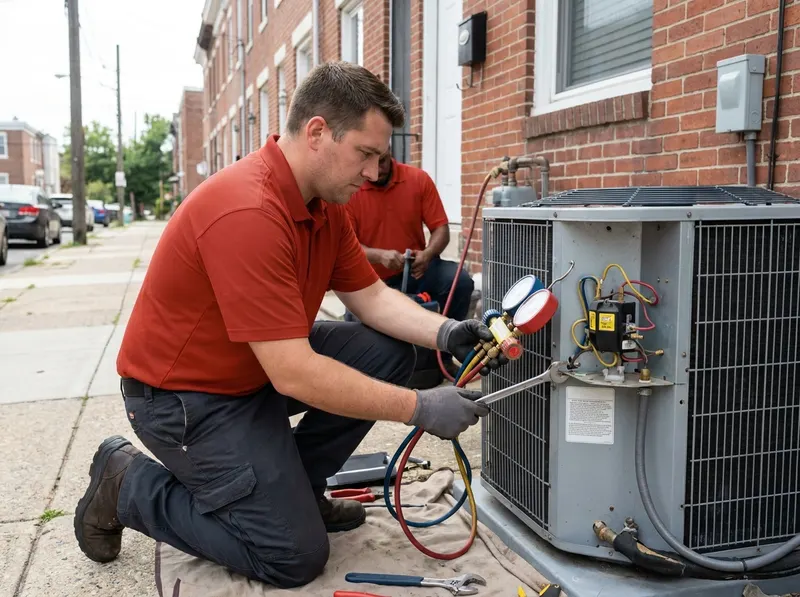
Central air conditioning repair restores cooling output and humidity control when residential condensing units or air handlers malfunction during humid summer conditions. Mechanical technicians inspect high and low refrigerant pressures using digital manifold gauges, test dual-run capacitors with microfarad meters, measure compressor winding resistance, clear obstructed condensate drain traps, and replace burned contactor points. Technicians evaluate indoor evaporator coils for ice accumulation, test thermostatic expansion valves (TXV) for proper superheat and subcooling balance, and clear blocked outdoor condenser fins clogged with urban dust and organic debris. If an air handler blower motor fails or draws excessive running amps, technicians replace the motor and dynamically balance the fan wheel to eliminate vibration and preserve proper CFM airflow over the cooling coil.
View details →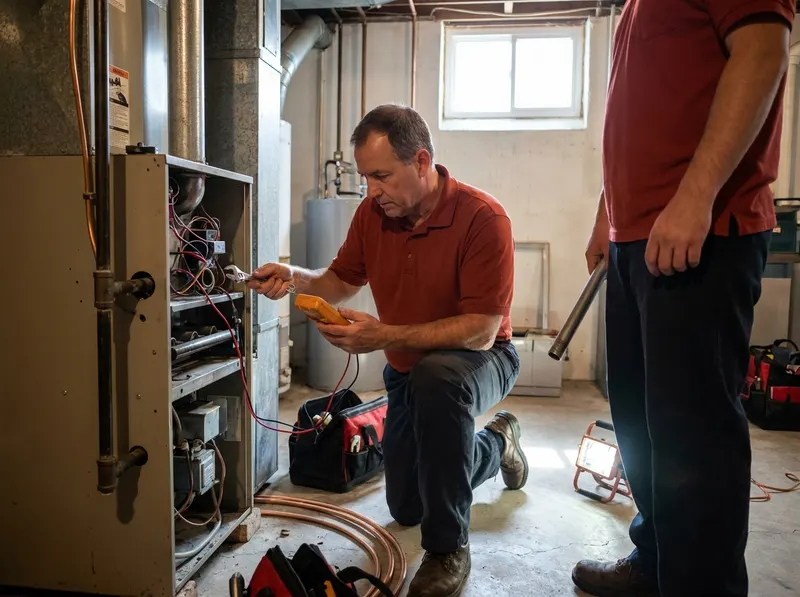
Gas furnace services cover full troubleshooting, seasonal tuning, and complete replacement of natural gas heating systems across Philadelphia properties. Technicians diagnose hot surface igniters, clean oxidized flame rectification sensors, replace seized draft inducer fan assemblies, and test primary limit switches and roll-out safety sensors. Every gas furnace service visit includes digital combustion analysis to measure flue gas temperatures, oxygen levels, and carbon monoxide parts per million, ensuring safe combustion ventilation. When replacing an obsolete atmospheric furnace, technicians install high-efficiency condensing gas furnaces featuring multi-speed ECM blower motors, two-stage gas valves, and sealed PVC intake and exhaust venting routed directly through perimeter walls or existing masonry chimneys lined with stainless steel.
View details →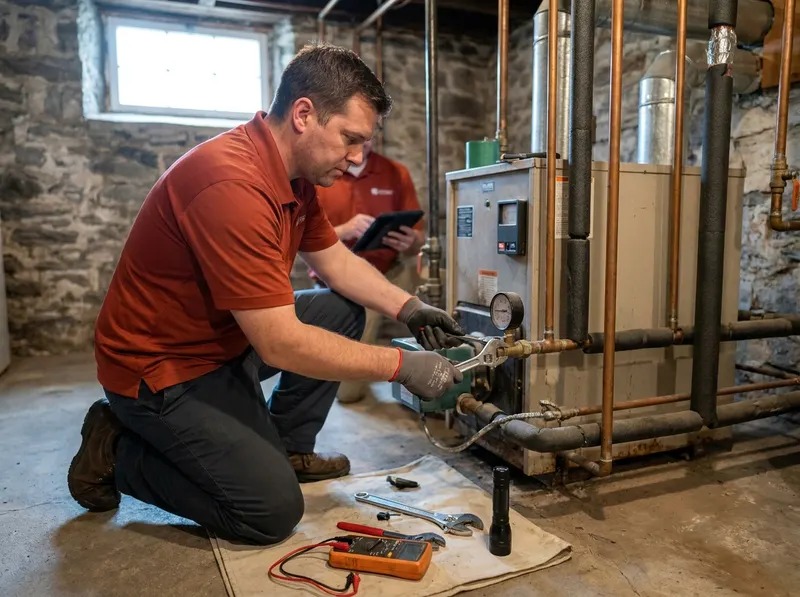
Hydronic boiler services address residential cast-iron sectional boilers, modern wall-hung condensing boilers, and combination boiler-water heater units serving radiator networks. Technicians troubleshoot electronic aqua-stats, replace faulty low-water cutoffs, test automatic water feeder valves, rebuild leaking zone valves, and swap out seized cast-iron or stainless steel circulator pumps. Service visits involve purging trapped air from multi-story riser piping, testing expansion tank diaphragms for waterlogging, and adjusting pressure-reducing valves to maintain twelve to fifteen PSI throughout cold-fill cycles. For high-efficiency condensing units, technicians flush primary heat exchangers to eliminate scale accumulation, clear acidic condensate neutralizer assemblies, and calibrate gas-air ratios to maintain optimal thermal efficiency.
View details →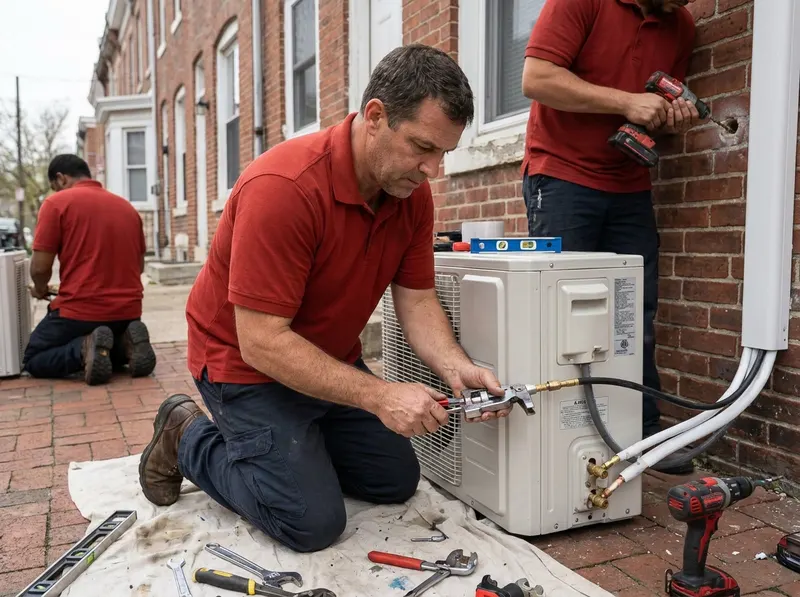
Ductless mini-split heat pump installation provides zoned heating and cooling for homes without ductwork, finished basements, room additions, and multi-family conversions. Inverter-driven outdoor condensers modulate compressor speed to match precise thermal loads, connected by insulated copper line sets to wall-mounted, floor-mounted, or ceiling-cassette indoor evaporators. Technicians route electrical whips, flare connections, pressure-test lines with dry nitrogen to 500 PSI, and pull deep vacuums below 500 microns before releasing factory refrigerant charges. Multi-zone systems give occupants individual temperature governance in separate living areas while achieving high SEER2 and HSPF2 efficiency ratings that lower year-round operating costs compared to electric baseboard heat or window air conditioners.
View details →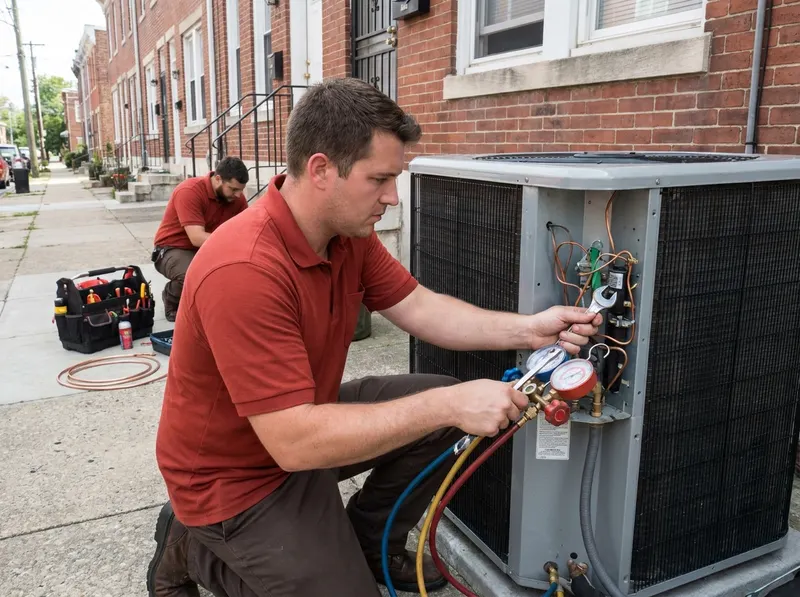
Central heat pump repair and replacement services address both traditional split heat pumps and dual-fuel hybrid heating systems. Technicians diagnose four-way reversing valves, electronic defrost control boards, outdoor ambient temperature sensors, crankcase heaters, and variable-speed fan motors. When heat pumps struggle during sub-freezing winter weather, technicians verify the staging of auxiliary electric heat strips or coordinate hybrid handoffs to auxiliary gas furnaces. System replacements incorporate variable-capacity inverter compressors that maintain heating capacity down to single-digit outdoor temperatures, eliminating high electrical usage spikes and delivering steady year-round indoor climate management.
View details →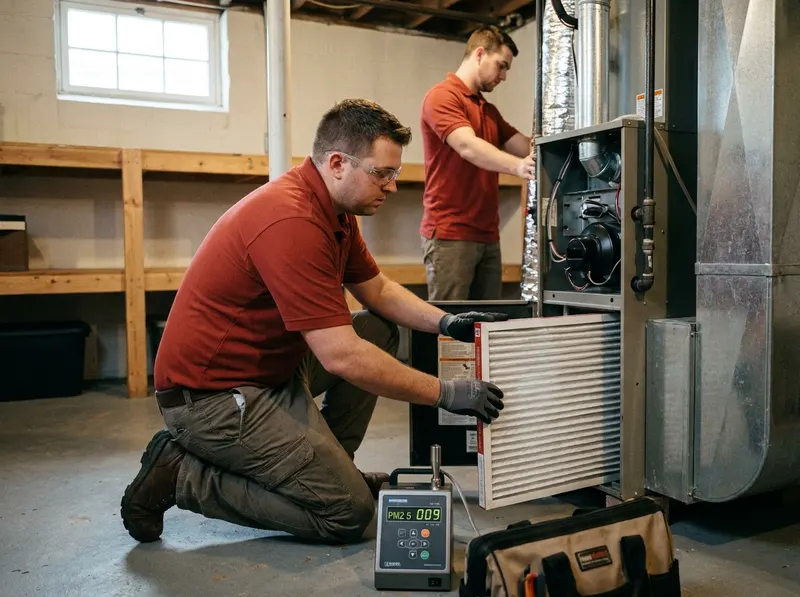
Indoor air quality solutions treat stale indoor environments, high interior particulate concentrations, and seasonal humidity imbalances common in tightly sealed residences. Technicians install high-MERV whole-home media air filter cabinets into existing return duct drops to capture airborne pollen, mold spores, pet dander, and fine particulate matter. For dry winter air, technicians integrate bypass or powered flow-through evaporative humidifiers that distribute moisture throughout the living space to protect hardwood floors and alleviate sinus irritation. Solutions also include ultra-violet germicidal irradiation lamps mounted near indoor cooling coils to eliminate microbial growth, as well as whole-home dehumidifiers and energy recovery ventilators (ERV) that exchange stale indoor air with conditioned fresh outdoor air.
View details →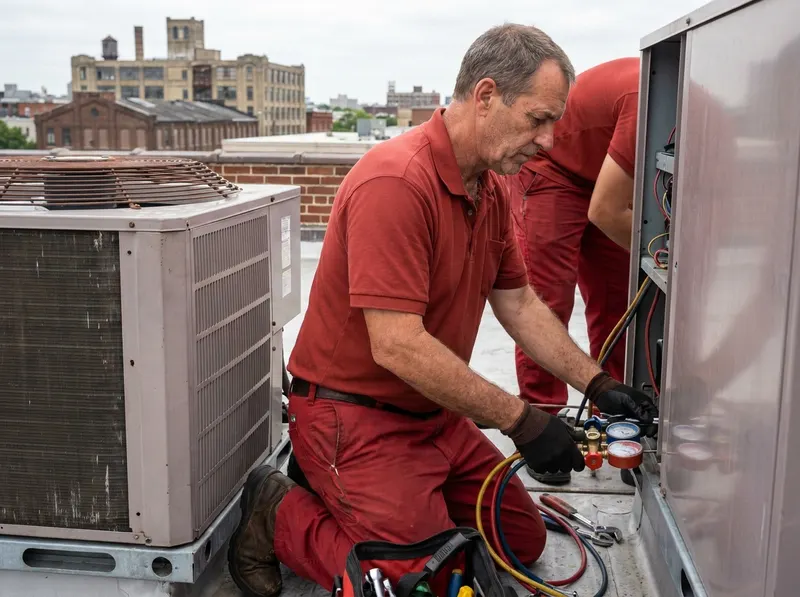
Commercial HVAC services support retail properties, commercial office spaces, restaurants, and mixed-use buildings operating packaged light-commercial rooftop units (RTUs). Technicians perform scheduled maintenance involving belt tensioning, blower bearing lubrication, economizer damper actuator calibration, and contactor inspections. Mechanical troubleshooting resolves commercial refrigeration circuit failures, economizer control faults, clogged curb condensate drains, and three-phase electrical supply imbalances. When rooftop systems reach the end of their operational lifecycle, technicians coordinate crane rigging, curb adapter fabrication, gas piping adjustments, and commercial thermostat network integration to complete turnkey rooftop unit replacements with minimal business disruption.
View details →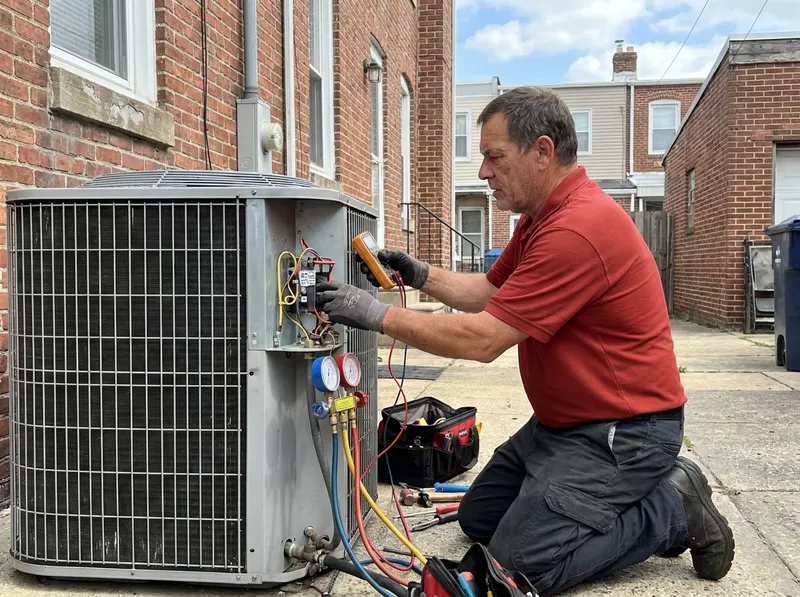
Emergency diagnostic services provide rapid on-site troubleshooting for sudden mechanical shutdowns, active electrical faults, and hazardous operational conditions. Technicians arrive with calibrated diagnostic equipment to test transformer voltages, verify control board relays, measure amp draws on safety switches, and locate refrigerant piping fractures. Technicians trace low-voltage control shorts, clear safety float switches tripped by clogged condensate drain lines, and evaluate cracked combustion chambers for safety hazards. Homeowners receive transparent, itemized mechanical assessments detailing necessary immediate repairs alongside complete equipment health evaluations before any physical repair work proceeds.
View details →An HVAC company in Philadelphia is a licensed mechanical contractor that diagnoses, repairs, installs, and maintains heating, ventilation, and air conditioning systems in residential and commercial properties.
You get a firm, itemized quote for your hvac before any work begins — no surprises, no pressure.
Careful prep, tidy work, and a full cleanup when we are done. We treat your home and belongings like our own.
The same trusted, background-checked team from the first call to the final check.
Selecting appropriate heating and cooling equipment in Philadelphia requires matching mechanical hardware to structural building physics. If you live in a classic three-story brick rowhome in Queen Village, Fishtown, or South Philadelphia that lacks existing duct infrastructure and features solid plaster walls, choose a multi-zone ductless mini-split heat pump system. Mini-splits deliver individual room temperature control, operate at high seasonal energy efficiency ratings, and require only small three-inch penetrations through exterior brick or siding for line sets. The trade-off is higher initial equipment purchasing cost and visible indoor air handler units mounted on perimeter walls. If your property already possesses a functioning sheet metal distribution network with adequately sized supply and return registers, choose a high-efficiency central split heat pump or central air conditioner paired with a gas furnace. Central forced-air systems keep mechanical equipment concealed and filter indoor air through a centralized return drop, but older rowhome duct networks often suffer from high static pressure, restrictive vertical transitions, and inadequate airflow to third-floor bedrooms. If your heating infrastructure utilizes cast-iron radiators, standing convectors, or embedded copper baseboards, choose a high-efficiency condensing gas boiler or modern cast-iron hydronic boiler replacement. Hydronic heating preserves original architectural character, delivers silent radiant comfort without dry winter drafts, and avoids the structural disruptions of running sheet metal ductwork through floor joists; the trade-off is that hydronic systems provide no summer dehumidification or cooling, requiring a secondary ductless cooling solution. When an existing air conditioning compressor, condensing furnace, or cast-iron boiler reaches twelve to fifteen years of age and faces a major component failure—such as a cracked heat exchanger, burned-out compressor motor, or leaking internal boiler section—choose complete system replacement. Installing modern high-efficiency machinery reduces monthly gas and electric utility bills, qualifies for regional utility efficiency rebates, and eliminates recurring repair expenses. Conversely, if a system under ten years of age experiences an isolated failure of a contactor, run capacitor, hot surface igniter, flame sensor, circulator pump cartridge, or blower motor, choose component-level mechanical repair to restore immediate operational integrity without unnecessary capital expense.
Every project gets a firm, written price after a free on-site visit. Ranges below for orientation.
Tell us about your hvac job and we'll send a clear, written quote — usually the same day. Or just call and talk to a real Philadelphia pro.
Philadelphia architecture presents distinct mechanical challenges shaped by two centuries of urban residential construction. In neighborhoods like South Philadelphia, Queen Village, and Fishtown, narrow brick rowhomes share uninsulated party walls, rely on narrow cellar access stairwells, and lack interior wall cavities for ductwork distribution. Installing central cooling or modern heating in these historic footprints requires specialized expertise in ductless mini-split line routing, low-profile hydronic boilers, and compact horizontal air handlers situated in knee-wall spaces or crawlspaces. In Northwest Philadelphia neighborhoods like Chestnut Hill, Mount Airy, and Germantown, substantial stone twins and historic single-family homes often rely on century-old gravity-fed hydronic heating networks with massive cast-iron radiators that demand precise water balancing and low-pressure boiler controls. Summer relative humidity levels climbing along the Delaware River and Schuylkill River valleys place excessive latent cooling loads on residential equipment, requiring precise system sizing to prevent short-cycling and humid indoor air. Technicians routinely navigate tight street parking, narrow alleyways, and historic building preservation requirements across Philadelphia County, matching mechanical equipment to the exact structural demands of local masonry, flat rubber roofs, and historic construction methods.
 West Point HVAC Air Stone HVAC